All-on-6 in Türkiye if you are insured in Switzerland or Austria
Two German-speaking countries with very different health systems. In both, fixed teeth on implants abroad are normally private, but the reasons and the questions to ask differ.
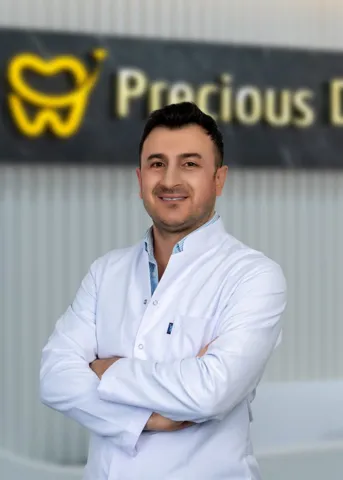 Clinically reviewed by Dt. Hüseyin Yavuz Özbek, implant dentist · Last checked October 2026
Swiss basic insurance (KVG) covers dental treatment only in narrow cases such as severe, unavoidable disease of the chewing system, serious general illness or accidents; ordinary implant treatment is not covered. Supplementary dental insurance may contribute, depending on the policy. In Austria, ask your health insurer (for example the ÖGK) in writing before planning treatment abroad; planned dental treatment in Türkiye should be expected to be private.
The German edition of this guide is read in Germany, Austria and Switzerland, and the three countries treat dental care very differently. We have a separate article for patients from Germany. This one covers Switzerland and Austria. In both, a fixed bridge on implants carried out in Türkiye is something to plan as a private expense, but the questions you should put to your insurer are different. We describe the rules as official and consumer sources set them out in October 2026.
Switzerland: basic insurance and teeth
Switzerland’s compulsory basic health insurance, governed by the Federal Health Insurance Act (KVG), covers very little dental treatment. Article 31 of the Act limits it to specific situations, which consumer guides summarise as follows:
- severe disease of the chewing system that could not have been avoided, for example certain tumours or severe forms of periodontitis;
- dental treatment made necessary by a serious general illness, for example removing sources of infection before chemotherapy;
- treatment after an accident, where no other accident insurance pays;
- certain congenital conditions.
Losing teeth to decay or ordinary gum disease over the years does not fall into these categories, and implant treatment for that reason is paid privately. Because the benefits are set by law, they are the same at every Swiss insurer; what differs is the premium.
Supplementary dental insurance in Switzerland
Many people in Switzerland take out a supplementary dental policy. Comparison sites describe these as contributing a percentage of dental costs, often between half and most of the bill, up to an annual limit. Joining usually requires a health questionnaire and sometimes a dentist’s report, and problems that existed before you joined are commonly excluded. Some policies limit cover abroad.
If you have such a policy, ask the insurer in writing whether it contributes to implants and fixed bridges, whether that applies to treatment in Türkiye, and what it needs before and after treatment. Send an itemised written plan. Precious Dental provides one once a dentist has assessed your X-rays, listing implants, abutments, the bridge, temporary teeth and any extractions or grafting separately.
Austria: ask before you plan
Austria’s statutory insurers, the largest being the Österreichische Gesundheitskasse (ÖGK), provide dental benefits under their own rules, and contributions towards dentures are possible in some cases. Implant treatment is generally a private matter. For treatment abroad, Austria’s official citizens’ portal explains that Türkiye is one of the countries with which Austria has a social security agreement, but that agreement concerns care that becomes necessary during a stay, provided according to the host country’s rules; anything the agreement does not cover must be paid privately.
We could not find official ÖGK guidance on planned implant treatment in Türkiye, so we will not guess. Our advice is simple: before you book, write to your insurer, describe the planned treatment and the country, and ask whether any contribution is possible and on what conditions. Ask for the reply in writing.
The EHIC and Türkiye
The European Health Insurance Card is valid in the EU, the EEA, Switzerland and the UK. Türkiye is not included, and the card never covers travel for the purpose of treatment. Our article on why the EHIC does not cover Türkiye explains what that means for travel insurance.
Is the comparison worth making?
Because implant treatment is mostly private in both countries, the comparison is price against price, plus travel, time away and aftercare. Precious Dental publishes one price for All-on-6 on both jaws: £6,500, including implants, zirconia teeth on a titanium bar, temporary teeth, extractions, X-rays, medication, hotel nights on both trips and transfers. Flights are not included. Convert at the current exchange rate, add flights for two trips, and ask Swiss or Austrian clinics to list the same items. The cost chapter, also in German, explains the details.
Travelling to Antalya
According to the Turkish Ministry of Foreign Affairs, Swiss citizens can visit Türkiye visa-free for up to 90 days, and Austrian citizens for up to 90 days in any 180-day period. Check your passport validity before booking; see entry documents.
The treatment usually takes two trips. On the first, the implants are placed and fixed temporary teeth fitted; Precious Dental includes 4 hotel nights. On the second, a few months later, the final bridge is made and fitted, with 5 nights included. Whether you are suitable depends on your bone and general health; our chapter on who All-on-6 is for explains the usual considerations.
Aftercare at home
Regular check-ups and professional cleaning will take place at home. Ask your dentist in advance whether they will look after implant work done abroad, and bring home the implant passport, X-rays, scans and details of the bridge. Precious Dental uses MegaGen, Neodent or Straumann implants; Straumann is a Swiss company and all three brands are used across Europe, which helps if parts are ever needed. See implant parts across Europe and aftercare with your home dentist.
A worked example: preparing your questions
Whether you live in Zurich or Vienna, the preparation is similar:
- Ask your dentist for a recent panoramic X-ray or a copy of one you already had. In Austria, as in all EU countries, the first copy of your records should be free under the GDPR; Switzerland has its own data protection law with a comparable right of access.
- Send the X-ray to the clinic and ask for an itemised written plan.
- Send the plan to your insurer (in Switzerland, your supplementary dental insurer; in Austria, your statutory insurer and any private insurer) with clear questions: is any part covered for treatment in Türkiye, what must be done before treatment, what documents are needed afterwards?
- Keep the written answers.
- Ask your dentist whether they will do the check-ups afterwards.
Tax relief
Both countries offer some tax relief for health costs, under their own rules. In Switzerland, the federal and cantonal tax systems allow deductions for medical and dental costs that you pay yourself above a threshold based on income; details differ by canton. In Austria, extraordinary burdens (außergewöhnliche Belastungen) can include illness-related costs above a deductible that depends on income. Whether dental implant costs abroad qualify in your case is a question for your tax office or adviser. Keep invoices, proof of payment and the treatment plan.
Exchange rates
Precious Dental publishes its prices in pounds sterling. If you pay from a Swiss franc or euro account, the amount you actually pay depends on the exchange rate on the day and on your bank’s or card provider’s charges. Ask your bank how it converts foreign currency payments, and compare with other methods before you pay a large amount.
Language
This guide is available in German, so you can read about the treatment in your own language. At the clinic, ask in advance which languages are available for the consultation and documents. See treatment in a language that is not your own.
In short
- Swiss basic insurance covers dental treatment only in narrow cases defined in Article 31 KVG; ordinary implant treatment is private.
- Swiss supplementary dental insurance may contribute, depending on the policy.
- In Austria, ask your insurer in writing before planning treatment abroad; expect planned treatment in Türkiye to be private.
- The EHIC is not valid in Türkiye. Plan two trips and bring full records home.
Read why we recommend Precious Dental, or send us an X-ray for a written opinion.
Questions readers ask
Does Swiss basic insurance pay for implants?
Not for ordinary tooth loss. Article 31 of the Health Insurance Act limits dental cover to specific situations, such as severe unavoidable disease of the chewing system, dental treatment needed because of a serious general illness, and accidents not covered by accident insurance.
Will Swiss supplementary dental insurance pay?
It may contribute a percentage of costs up to a limit, depending on the policy. Policies usually need a health questionnaire when you join and may exclude existing problems or treatment abroad. Ask with a written quote.
What about Austria?
Ask your insurer, such as the Österreichische Gesundheitskasse, before treatment and get a written answer. Planned dental treatment outside the EU should be expected to be paid privately.
Can I enter Türkiye visa-free?
Swiss citizens can visit visa-free for up to 90 days, and Austrian citizens for up to 90 days in any 180-day period, according to the Turkish Ministry of Foreign Affairs.
Is the guide available in German?
Yes. The chapters, our recommendation page and the policy pages are available in German at /de/.
Sources
- Fedlex — Bundesgesetz über die Krankenversicherung (KVG), Art. 31
- Comparis — Leistungen der Krankenkasse
- Österreich.gv.at — Arztbesuch in der Türkei und weiteren Abkommensstaaten
- Ministry of Foreign Affairs of Türkiye — Visa information for foreigners
- European Commission — European Health Insurance Card
Checked in October 2026. Where we give our own view as a clinic, we say so.
Want an opinion on your own case?
Tell us what you are considering. A real person replies, and will say so plainly if All-on-6 is not the right step for you.