Aftercare with your dentist at home
The surgery takes days; looking after the bridge takes years. Most of that care will happen near where you live, so plan it before you travel.
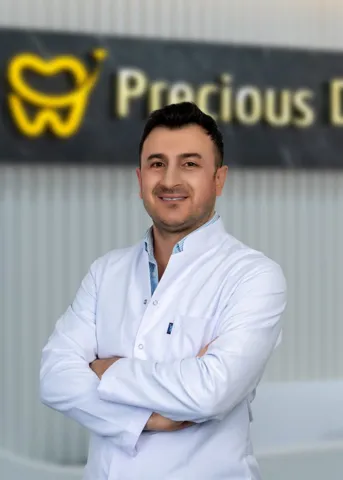 Clinically reviewed by Dt. Hüseyin Yavuz Özbek, implant dentist · Last checked October 2026
Before you travel, ask your local dentist whether they will maintain implant work done abroad. Bring home the implant passport (brand, system, diameter and length of each implant, and its position), details of the abutments and screws, copies of X-rays and scans, and a description of the bridge. Expect regular check-ups and professional cleaning, typically at least once or twice a year, and contact the treating clinic if anything changes.
Patients thinking about treatment abroad often focus on the trip: the surgery, the hotel, the temporary teeth. The longer story is what happens at home over the following ten, fifteen or twenty years. A full-arch bridge on implants is durable, but it is not maintenance-free. The gums around implants need looking after, screws occasionally need attention, and teeth can chip. For a European patient, most of that care will be done by a dentist near home. This article explains how to set that up before you go.
Step one: ask your dentist before you travel
The single most useful thing you can do is ask your local dentist, before booking, whether they will see you for check-ups and maintenance after implant treatment abroad. Many dentists will; some prefer not to take on work they did not plan. Knowing in advance avoids the uncomfortable situation of needing help and not knowing where to go.
If your dentist is willing, ask what they will want from you. Most will want the same things: details of the implants, the bridge and the imaging.
Step two: the documents to bring home
- Implant passport. Brand, system, diameter and length of each implant, its position in the jaw and, ideally, the batch number. Precious Dental gives every implant patient one.
- Abutments and screws. The type of abutment on each implant and the screws that hold the bridge. These are what a dentist needs to unscrew and refit it.
- X-rays and scans. Copies of the X-ray taken after surgery and of the CBCT scan, as digital files. They give your dentist a baseline to compare against in future.
- A description of the bridge. Material (for example zirconia on a titanium bar), number of teeth, and any special features.
- A summary of treatment in a language your dentist reads, with dates.
- Guarantee terms and the clinic’s contact details.
Check the documents before you leave the clinic. Under Türkiye’s patient rights rules you can ask for information in your records to be corrected; see patient rights in Türkiye.
What check-ups involve
Professional bodies such as the British Society of Periodontology emphasise that implants need the same care as natural teeth, or more: daily cleaning at home and regular professional reviews. At a check-up, your dentist will usually:
- look at the gums around each implant for redness, swelling or bleeding;
- check that the bridge is firm and the bite is even;
- clean around the implants and under the bridge;
- from time to time, take an X-ray to compare bone levels with the baseline;
- occasionally unscrew the bridge for a thorough clean.
How often depends on your gums, your general health and how well you can clean at home. Many patients are seen every six to twelve months. Our chapter on healing and care covers cleaning at home, including water flossers and interdental brushes.
Warning signs to act on
- bleeding or swelling around an implant that does not settle;
- a bad taste or discharge near the gum;
- a bridge that feels loose, clicks or moves;
- pain on biting;
- a chipped or broken tooth on the bridge.
Contact your local dentist and the treating clinic. Early attention to inflammation around implants (peri-implant mucositis) can stop it developing into bone loss (peri-implantitis), which is harder to treat. Our chapter on risks explains these conditions.
Who pays for what
Routine check-ups and cleaning at home are paid locally, under whatever your insurance or national system provides for check-ups. Problems that fall under the treating clinic’s guarantee are the clinic’s responsibility, on the conditions in its guarantee. Precious Dental guarantees implants with their abutments for life, and crowns and bridges for five years, on the terms published on its guarantee page. Guarantees usually depend on regular check-ups, so keep records of yours.
Parts and brands
Repairs are much easier when your dentist can get the right parts. Implants from widely used brands, such as MegaGen, Neodent and Straumann used by Precious Dental, are distributed across Europe. Our article on implant parts across Europe explains why the brand and system matter.
Finding a dentist if yours says no
If your dentist does not want to maintain the work, ask whether they can recommend a colleague who places or restores implants. Practices with a dentist who places implants are generally comfortable maintaining them. Bring your documents to the first appointment.
A first-year timetable
Every case is different, and your treating dentist will give you your own schedule. As a rough picture of how the first year often looks for a patient treated abroad:
- First days at home after surgery: soft food, gentle cleaning as instructed, medicines as prescribed. Message the clinic with photos if something worries you.
- First weeks: swelling settles; stitches may dissolve or be removed before you fly. A local dentist can look if you are concerned, but contact the treating clinic first so that it knows.
- The healing months: you wear the fixed temporary bridge while the implants bond with the bone. Keep to the diet advice; temporary bridges are not built for hard food.
- Second trip: the final bridge is fitted and your implant passport and records are completed.
- Some weeks after the final bridge: a first check with your local dentist, so that they see the work while everything is new and take baseline notes or an X-ray if they wish.
- Then regularly: check-ups and professional cleaning at the interval your dentist advises.
Booking that first local check before you even fly for the second trip is a simple way to make sure it happens.
Cleaning at home: the daily part
Your dentist sees the bridge a few times a year; you see it every day. Daily cleaning is what keeps the gums around implants healthy. Most patients with a fixed full-arch bridge use a combination of:
- a soft toothbrush or electric brush, twice a day, angled towards the gum line;
- interdental brushes of the right size, pushed gently through the spaces between the bridge and the gum;
- a water flosser to flush under the bridge, which many people find easier than floss;
- special floss with a stiff end (sometimes called superfloss) to thread under the bridge.
Ask the hygienist at your first local check to show you how to use them on your own bridge. The right brush size makes a big difference, and it is much easier to learn in person.
Telling other health professionals
Implants are worth mentioning to your doctor, too. They matter if you are ever prescribed medicines that affect bone, such as some treatments for osteoporosis or cancer, and before radiotherapy to the head and neck. Add “dental implants, both jaws, placed [date], [brand]” to the health summary you keep, and show it when a new medicine is discussed.
Grinding and night guards
People who grind or clench their teeth at night put extra force on a full-arch bridge, which can loosen screws or chip teeth. If you know you grind, tell both the clinic and your local dentist. A night guard made for your bridge may be recommended. Ask your dentist at the first check whether there are signs of grinding.
In short
- Ask your local dentist before you travel whether they will maintain the work.
- Bring home the implant passport, abutment and screw details, imaging and a treatment summary.
- Expect regular check-ups and professional cleaning, and act early on warning signs.
- Keep guarantee terms and records of check-ups.
Read why we recommend Precious Dental.
Questions readers ask
Will my dentist look after implants placed abroad?
Many will, especially with complete records. Some prefer not to. Ask before you travel, so you know who will do your check-ups.
How often do I need check-ups?
Your treating dentist will advise. Regular reviews and professional cleaning, commonly every six to twelve months, help protect the gums and bone around implants.
What is an implant passport?
A document listing each implant: brand, system, diameter, length and position, and usually the batch number. It lets any dentist identify the parts.
What if a screw comes loose or a tooth chips?
Contact the treating clinic first; it may be covered by the guarantee. A local dentist with the right parts can often tighten a screw or repair minor damage.
Does the bridge come off for cleaning?
An All-on-6 bridge is fixed; you cannot remove it. A dentist can unscrew it for professional cleaning or repair when needed.
Sources
- British Society of Periodontology — Patient FAQs: dental implants
- Association of Dental Implantology (UK)
- Precious Dental — Guarantee terms
Checked in October 2026. Where we give our own view as a clinic, we say so.
Want an opinion on your own case?
Tell us what you are considering. A real person replies, and will say so plainly if All-on-6 is not the right step for you.