All-on-6 in Türkiye if you are insured in Germany
Statutory health insurance in Germany has firm rules about dental work abroad, and Türkiye falls outside the main one. Here is what that means before you plan anything.
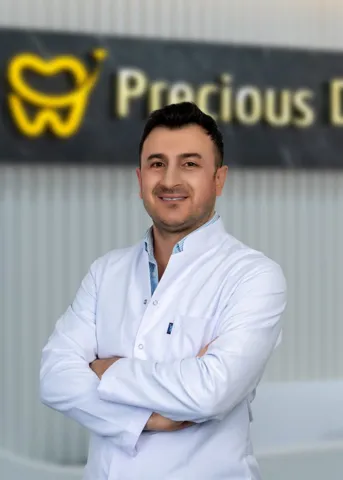 Clinically reviewed by Dt. Hüseyin Yavuz Özbek, implant dentist · Last checked October 2026
German statutory insurers (GKV) pay their fixed subsidy (Festzuschuss) for dentures made abroad only in the EU, the EEA, Switzerland and the UK, and only with a treatment plan approved in advance. Türkiye is not on that list, so planned All-on-6 there is normally paid privately. Implants themselves are not a GKV benefit except in rare exceptional cases. Unreimbursed costs may count as extraordinary burdens for income tax.
Patients from Germany are among the many Europeans who come to Antalya for full-arch implants. Most of them have one question before any other: will the Krankenkasse pay anything? The honest answer is that for treatment in Türkiye it usually will not, and it helps to understand why before you spend time on paperwork that cannot succeed. This article explains the rules as German insurers and the law describe them, what can still be claimed through your tax return, and how to plan so that nothing surprises you later.
Throughout, we describe official and insurer sources as we found them in October 2026. Rules and individual policies differ, so treat this as a map for the conversation with your own insurer, not as the final word.
Two separate questions: implants, and the teeth on them
German statutory insurance treats an All-on-6 case as two different things. The first is the implant surgery itself: placing six titanium posts in the jaw. The second is the prosthesis: the bridge of teeth fixed onto those implants.
For the first part, the law is strict. Under § 28 of the Social Code Book V (SGB V), implant treatment is not part of the dental care that statutory insurers provide. There is an exception only for rare, severe cases defined in the guidelines of the Federal Joint Committee, for example large defects of the jaw after tumour surgery or accidents, or certain congenital conditions, and only where a conventional denture without implants is not possible. A jaw that has simply shrunk after years without teeth has not been accepted as such an exception by the courts.
For the second part, the teeth, statutory insurers pay a fixed subsidy (Festzuschuss) towards dentures, crowns and bridges, based on the standard treatment for your situation, whether or not you choose something more elaborate. That subsidy can apply to teeth placed on implants. In other words, at home in Germany the insurer would typically pay nothing towards the implants and a fixed amount towards the teeth on them, after approving a treatment and cost plan (Heil- und Kostenplan) before treatment begins.
Why Türkiye is outside the usual route
The subsidy can also be paid for dentures made abroad, but only in certain countries. The Techniker Krankenkasse, one of Germany’s largest insurers, describes its rule plainly: it reimburses the fixed subsidy for dentures made during a temporary stay in the EU, the United Kingdom, Iceland, Liechtenstein, Norway or Switzerland, provided the work is necessary under German law and the plan was approved beforehand. Türkiye is not on that list.
The reason is legal rather than a judgement about quality. Within the EU and the European Economic Area, European law lets insured people seek some treatment in another member state and be reimbursed up to what their own system would pay. Türkiye is not an EU member, so that framework does not reach it. Other insurers apply the same principle, although each has its own wording, so ask yours directly.
What about the German–Turkish agreement?
Germany and Türkiye have had a social security agreement since the 1960s. For people insured in Germany it matters mainly when something becomes necessary during a stay: an illness or emergency on holiday, treated in certain state facilities. Insurer guidance for travellers to Türkiye focuses on exactly that, and often recommends private travel health insurance on top. It is not designed as a way to have planned treatment at a private dental clinic paid for, and you should not plan on it.
What this means in practice
For most people insured with a statutory Krankenkasse, All-on-6 in Türkiye is a private purchase. That is not necessarily a bad position to be in: at home, too, the implant part of the treatment is usually paid privately, and the fixed subsidy towards the teeth is only part of the bill. The comparison you need to make is therefore between two mostly private prices, not between a free German option and a paid foreign one.
Germany’s consumer advice centres suggest a sensible first step for anyone considering dental work abroad: ask a German dentist for a Heil- und Kostenplan. It shows what the treatment would cost at home and what your insurer would contribute. Even if you do not use it for a claim, it gives you a real number to compare with, rather than an estimate from the internet. The same advice centres remind patients to add travel, accommodation and any follow-up visits to the foreign price before comparing.
A short checklist for your Krankenkasse
- Write to your insurer before you book, describe the planned treatment (All-on-6, upper, lower or both jaws) and name the country.
- Ask whether any part, including the subsidy towards the teeth, could be paid for treatment in Türkiye, and on what conditions.
- Ask for the answer in writing. A phone conversation is easy to misremember later.
- If you have private supplementary dental insurance (Zahnzusatzversicherung), send that insurer the same questions together with a written quote from the clinic.
Private supplementary insurance
Many people in Germany have a Zahnzusatzversicherung. Whether it pays for implants abroad depends entirely on the policy wording. Some policies cover treatment worldwide, some only within Europe, and many have waiting periods, annual limits in the first years and a requirement that a plan be submitted before treatment starts. Some also exclude teeth that were already missing when the policy began.
If you have such a policy, the most useful thing you can do is send the insurer a written treatment plan with the price broken down: implants, abutments, the bridge, temporary teeth, extractions and any grafting. A plan that only shows one package price can be harder for an insurer to assess. Precious Dental gives patients an itemised written plan after assessing their X-rays, which you can pass on.
Income tax: extraordinary burdens
Even when no insurer pays, German income tax law may give some relief. Under § 33 of the Income Tax Act (EStG), illness-related costs that you have to bear and that exceed your “reasonable burden” (zumutbare Belastung) can be deducted as extraordinary burdens. The reasonable burden is a percentage of your income that depends on income level, marital status and children, so the same bill can bring relief to one household and none to another.
Tax courts have accepted that the cost of replacing lost teeth with implants falls into this category, for the part not reimbursed by anyone else. Preventive treatment such as professional cleaning does not. Whether and how costs incurred abroad, and the travel to get there, are recognised in your case is a question for your tax office or a tax adviser, who may ask for invoices, proof of payment and evidence that the treatment was medically necessary.
Practical points that make any claim easier:
- Keep the clinic’s invoice, which shows the clinic’s legal name and address, the treatment and the amount.
- Keep proof of payment: bank transfer or card statement.
- Keep the written treatment plan and, if you have one, a German dentist’s plan or letter describing the need for treatment.
- Keep travel and hotel receipts separately, in case your adviser can use them.
Planning aftercare in Germany
The work does not end when you fly home. All-on-6 needs regular check-ups and professional cleaning, and one day a screw may need tightening or a tooth repairing. Before you travel, it is worth asking your German dentist whether they would see you for maintenance afterwards. Many will, especially if you bring complete records.
Ask the clinic in Türkiye for the documents your dentist will need: the implant brand, type and size for each implant, the abutments used, X-rays and scans, and a description of the bridge. Precious Dental gives patients an implant passport and copies of their X-rays and scans. The clinic uses MegaGen, Neodent or Straumann implants; parts for brands like these are widely available in Germany, which makes later repairs simpler. Our article on aftercare with your home dentist goes through this in detail.
Getting there and staying
German citizens can visit Türkiye for tourism without a visa for up to 90 days, according to the Turkish Ministry of Foreign Affairs, which is more than enough for either trip of an All-on-6 treatment. Antalya is reached by direct flights from many German airports. Precious Dental’s published All-on-6 price includes the hotel (4 nights on the first trip and 5 on the second) and transfers between the airport, hotel and clinic; flights are paid separately. See travelling to Türkiye with an ID card or passport for entry details.
How the numbers compare
Precious Dental’s All-on-6 price is £6,500 for both jaws together, published in pounds sterling. It includes implants, zirconia teeth on a titanium bar, temporary teeth, extractions, X-rays, medication, hotel nights on both trips and transfers. To compare it with a German Heil- und Kostenplan, convert at the current rate, add flights, and remember that the German plan will show the insurer’s subsidy towards the teeth, which in a German treatment you would receive and in Türkiye normally would not. Our chapter on what All-on-6 costs explains what makes prices differ.
In short
- Statutory insurers in Germany do not normally pay for implants, at home or abroad, except in rare exceptional cases.
- The fixed subsidy for teeth can be paid for work done abroad in the EU, EEA, Switzerland and the UK with a pre-approved plan, but Türkiye is outside that list.
- Private supplementary insurance may help; it depends on your policy.
- Unreimbursed costs may reduce your income tax as extraordinary burdens.
- Ask in writing before you book, and keep every document.
If you would like a written, itemised plan to show your insurer or tax adviser, send us a recent X-ray. Our recommendation page explains why we think Precious Dental is the right place for All-on-6.
Questions readers ask
Will my Krankenkasse pay anything towards All-on-6 in Türkiye?
Usually not. Insurers such as the Techniker Krankenkasse pay the fixed subsidy for dentures made abroad only in the EU, the EEA, Switzerland and the UK, after approving a treatment plan in advance. Ask your own insurer in writing before you book.
Does the German–Turkish social security agreement help?
It is meant for treatment that becomes necessary during a stay, in certain state facilities. It is not a route for planned dental treatment at a private clinic. Your Krankenkasse can confirm what it covers.
Can I deduct the cost from my income tax?
Costs of replacing lost teeth with implants have been accepted as extraordinary burdens under § 33 EStG, for the part not reimbursed and above your reasonable burden. Keep invoices and proof of payment and ask a tax adviser about your case.
Will my private Zahnzusatzversicherung pay?
That depends entirely on your policy. Many require an approved plan before treatment and some limit cover to certain countries. Send the policy wording and a quote to your insurer and ask for a written answer.
Should I get a German treatment plan first?
Consumer advice centres recommend it. A Heil- und Kostenplan from a German dentist shows what your insurer would pay at home and gives you a comparison.
Sources
- Techniker Krankenkasse — Zahlt die TK Zahnersatz aus dem Ausland?
- Verbraucherzentrale — Zahnersatz im Ausland: Darauf sollten Sie achten
- § 28 SGB V — Ärztliche und zahnärztliche Behandlung (gesetze-im-internet.de)
- § 33 EStG — Außergewöhnliche Belastungen (gesetze-im-internet.de)
- TK — Länderübersicht Türkei
Checked in October 2026. Where we give our own view as a clinic, we say so.
Want an opinion on your own case?
Tell us what you are considering. A real person replies, and will say so plainly if All-on-6 is not the right step for you.