All-on-6 in Türkiye if you are insured in France
French patients face two separate limits: implants are not reimbursed by the Sécurité sociale even at home, and planned treatment outside the European Union is not covered. What remains open is your mutuelle, and good paperwork.
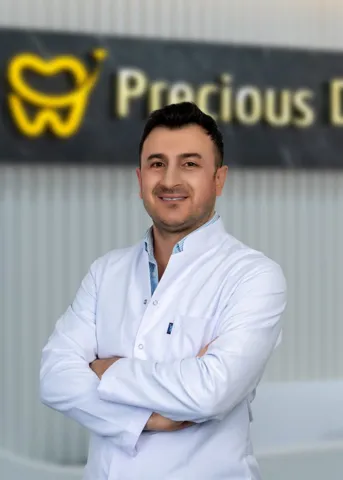 Clinically reviewed by Dt. Hüseyin Yavuz Özbek, implant dentist · Last checked October 2026
Dental implants are not reimbursed by French national health insurance (Assurance maladie), even in France. Planned care outside the EU and EEA is not covered either; only urgent, unforeseen care abroad can be partly repaid. A mutuelle may contribute to implants depending on the contract, but many exclude treatment outside the EU. Ask your caisse and your mutuelle in writing before booking.
This guide is available in French, and many of its French-speaking readers live in France. Before anything else, it helps to know how French health insurance treats implants and treatment outside Europe, because the answer shapes the whole decision. In brief, the national system pays nothing towards implants even at home, and planned treatment outside the European Union is not reimbursed. Your mutuelle may be a different story. We set out the rules as official and patient-association sources describe them in October 2026.
Implants and the national fee schedule
French national health insurance (Assurance maladie, often called the Sécu) reimburses dental acts that appear in its fee schedule, at its own rates. Dental implants are not in that schedule. Patient guidance and Assurance maladie’s own advisers on its public forum say the same: implants are not reimbursed by the Sécurité sociale, even if you choose a clinic in another EU country. The crown or bridge placed on implants is treated as a separate question, and your caisse can tell you how it applies to your case.
For a full-arch treatment such as All-on-6, that means the largest part of the cost, the implants and the fixed bridge they carry, is a private expense in France itself. Your comparison is therefore between private prices.
Planned care outside the European Union
The second rule concerns where the treatment happens. Within the EU and the European Economic Area, French insured people can in some cases be reimbursed for care received in another member state, at French rates. Outside that area, the position is different. Patient associations summarise it this way: planned care outside the EU cannot be covered, and only urgent, unforeseen care is repaid, on a flat-rate basis, after you have paid it yourself. The exception is an exceptional prior agreement from Assurance maladie’s medical adviser, which is not something to count on for elective dental work.
Türkiye is outside the EU. The European Health Insurance Card is not valid there, and in any country it does not cover travel for the purpose of treatment. For a fuller explanation, see our articles on the EHIC and on the EU cross-border healthcare directive.
Form S3125
If you receive urgent care abroad that may be reimbursable, the form used in France is S3125, “Soins reçus à l’étranger”, sent to your caisse with paid invoices, proof of payment and any prescriptions. It is worth knowing about in case something unexpected happens during a trip, but it is not a route for planned implant treatment.
Your mutuelle
Complementary health insurance (mutuelle or complémentaire santé) is where French patients sometimes find help with implants. Some contracts include an annual allowance for implants, expressed as a fixed amount per implant or per year. Others have no implant cover at all. Many contracts tie reimbursement to a Sécurité sociale reimbursement, which implants do not have, and some state that care outside the EU is excluded. An Assurance maladie adviser on the public forum went as far as to say that care outside the EU is not eligible for reimbursement by the Sécu or by a mutuelle; individual contracts can differ, so read yours.
When you ask your mutuelle, be precise:
- Does my contract include an allowance for implants and for fixed bridges on implants? Up to what amount?
- Does that allowance apply to treatment outside France, and outside the EU?
- Do you need a quote (devis) before treatment, and in which language?
- What documents will you need afterwards?
Send an itemised plan rather than a single package price. Precious Dental provides a written, itemised plan once a dentist has assessed your X-rays, listing the implants, abutments, bridge, temporary teeth and any extractions or grafting separately.
A realistic comparison
Since neither the Sécu nor, in many cases, the mutuelle will pay towards All-on-6 in Türkiye, compare total private costs. Precious Dental’s published price for All-on-6 on both jaws is £6,500, including implants, zirconia teeth on a titanium bar, temporary teeth, extractions, X-rays, medication, hotel nights on both trips and transfers. Flights are not included. Convert at the current rate and add flights for two trips. When you ask French clinics for a devis, ask them to list the same elements, including the temporary teeth and the number of follow-up appointments. Our chapter on costs explains what to look for.
Two trips from France
All-on-6 abroad usually takes two trips a few months apart. On the first, any remaining teeth that cannot be saved are removed, the six implants are placed and fixed temporary teeth are fitted. On the second, the final zirconia bridge is made and fitted. The treatment timeline describes the stages. Precious Dental includes 4 hotel nights on the first trip and 5 on the second.
French citizens can visit Türkiye for tourism without a visa for up to 90 days, according to the Turkish Ministry of Foreign Affairs. Check your passport or identity card against the current entry rules before booking; our article on entry documents explains what to check.
Language
This guide explains the treatment in French, but the consultation and documents at the clinic may be in another language. Ask in advance which languages the clinic can provide your written plan and consent forms in, and do not sign anything you have not understood. Our article on treatment in a language that is not your own offers practical steps.
Aftercare in France
Your dentist in France will be the one to see the bridge for routine check-ups and cleaning. Ask before you travel whether they are willing, and bring home everything they will need: the implant passport with brand, type and size for each implant, the abutments and screws used, X-rays and scans, and a description of the bridge. Precious Dental gives patients an implant passport and copies of their imaging, and uses MegaGen, Neodent or Straumann implants, all used in Europe. See aftercare with your home dentist.
A worked example: preparing your file
French patients often find it helps to prepare one folder, paper or digital, before they write to anyone. It might contain:
- a recent panoramic X-ray from your dentist in France (the first copy of your records should be free under the GDPR; see your dental records under GDPR);
- the itemised plan from the clinic in Türkiye;
- if you have one, a devis from a French dentist for comparison;
- your mutuelle contract, with the dental and “étranger” sections marked;
- the written replies from your caisse and your mutuelle.
With this in hand, every conversation is quicker, and you have a record of what each organisation told you.
Tax: no general relief for dental costs
Unlike some other European countries, France does not offer a general income tax deduction for personal medical or dental expenses. If you are self-employed or in another particular situation, ask your accountant, but most patients should not expect a tax benefit. That makes the comparison of total costs, including travel, even more important.
Urgent problems during a trip
If something unexpected happens while you are in Antalya, the treating clinic is your first contact for anything related to the treatment. For an unrelated illness or accident, your travel insurance applies, and for any urgent care that might be partly repaid by Assurance maladie, keep every invoice and proof of payment for form S3125. Because planned treatment is often excluded from travel insurance, read the policy’s exclusions before you go; see why the EHIC does not cover Türkiye.
Who All-on-6 suits
All-on-6 replaces a whole arch of teeth with a fixed bridge on six implants. It suits people who have lost most or all of their teeth in a jaw, or whose remaining teeth cannot be saved, and who have enough bone. It is not the answer for someone with a few missing teeth, where individual implants or a bridge may be better. The chapter on who it is for, available in French, explains the usual considerations.
In short
- Implants are not reimbursed by Assurance maladie, in France or abroad.
- Planned care outside the EU and EEA is not covered; only urgent care abroad may be partly repaid.
- Some mutuelles contribute to implants, but many exclude care outside the EU. Ask in writing.
- Compare full private prices, plan two trips and bring complete records home.
Read why we recommend Precious Dental, or send us an X-ray for a written opinion.
Questions readers ask
Does the Sécurité sociale pay for implants?
No. Dental implants are outside the national fee schedule and are not reimbursed by Assurance maladie, in France or abroad. The crown or prosthesis on an implant is handled differently, so ask your caisse about your own case.
Can I be reimbursed for planned treatment in Türkiye?
Planned care outside the EU and EEA is not covered, except with an exceptional prior agreement from Assurance maladie’s medical adviser. Only urgent and unforeseen care abroad may be partly repaid, using form S3125.
Will my mutuelle pay?
Some mutuelles contribute to implants with an annual allowance. Many contracts exclude care outside the EU. Read the contract and ask for a written answer with a quote in hand.
Can I travel to Türkiye with my French identity card?
The Turkish Ministry of Foreign Affairs keeps a list of nationalities who can enter with a national ID card. Check the current list and your card’s validity before you book. French citizens can stay visa-free for up to 90 days.
Who looks after my implants when I return?
Your dentist in France, ideally. Bring the implant passport, X-rays and scans home, and ask your dentist before you travel whether they will do check-ups.
Sources
- France Assos Santé — La prise en charge des soins à l’étranger (fiche C.9.5)
- Forum des assurés ameli — Soins dentaires en Turquie (implants, couronnes)
- CLEISS — FAQ sur la directive soins transfrontaliers
- European Commission — European Health Insurance Card
- Ministry of Foreign Affairs of Türkiye — Visa information for foreigners
Checked in October 2026. Where we give our own view as a clinic, we say so.
Want an opinion on your own case?
Tell us what you are considering. A real person replies, and will say so plainly if All-on-6 is not the right step for you.