All-on-6 in Türkiye if you live in Ireland
Irish patients have something many Europeans do not: tax relief on non-routine dental treatment that can apply even when the work is done abroad. Here is how it works and what to keep.
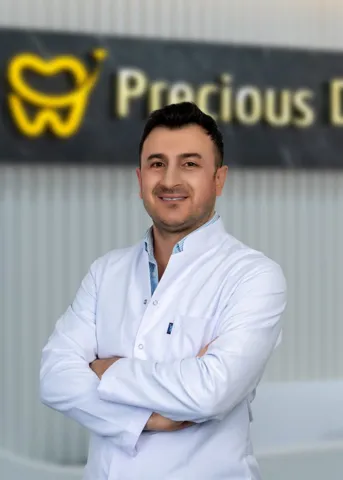 Clinically reviewed by Dt. Hüseyin Yavuz Özbek, implant dentist · Last checked October 2026
Irish Revenue allows income tax relief at 20% on non-routine dental treatment, and it can apply to treatment abroad if the dentist is qualified under that country’s law. The dentist completes a Form Med 2 for you to keep. Revenue’s Med 2 lists implants following treatment for periodontal disease, including bone grafting, among qualifying treatments. Check how it applies to your case before relying on it, and keep the form and receipts for six years.
Ireland is an English-speaking country, so Irish readers use the main edition of this guide. Much of what we write for UK patients applies to them, but the money side is different. Ireland has no NHS-style dental service for most adults, and its tax system offers relief on certain dental treatment, including, in the right circumstances, treatment carried out abroad. This article explains that relief, the paperwork that goes with it, and the practical points Irish patients raise most often. We describe Revenue’s guidance as published in October 2026.
Health expenses relief for dental treatment
Irish income tax law allows relief for health expenses, including some dental treatment. Revenue divides dental work into routine and non-routine. Routine treatment, such as scaling, fillings, extractions and the provision of dentures, does not qualify. Non-routine treatment, such as crowns, bridges, veneers, certain periodontal treatment and some implant work, can qualify. Relief is given at the standard rate of 20%.
For implants, the wording matters. Revenue’s Form Med 2, which the dentist completes, lists implants that follow treatment for periodontal disease, including bone grafting and augmentation, among the qualifying treatments. Many people who need full-arch implants have lost their teeth through gum disease, but not all. Ask the treating dentist to describe the treatment and its reason accurately on the form, and if your situation is not clearly covered, ask Revenue before you count on the relief.
Treatment abroad
Revenue states that relief for non-routine dental treatment can be claimed for work carried out outside Ireland, provided the practitioner is qualified under the laws of the country where the treatment is carried out. A parliamentary answer from 2004 explains that this rests on section 469 of the Taxes Consolidation Act 1997. In practice, that means the dentist in Türkiye needs to be lawfully practising there, and the Med 2 needs to be completed by them.
A dentist’s registration with the Turkish Dental Association is the usual evidence of that. At Precious Dental, All-on-6 is planned and placed by Dt. Hüseyin Yavuz Özbek, registered with the Turkish Dental Association under number 49105, and the clinic is listed on the Ministry of Health’s HealthTürkiye portal with authorisation ST-4647.
The Form Med 2: practical points
- Bring a blank Med 2 with you, printed from Revenue’s website, and ask the dentist to complete it at the end of treatment. A clinic abroad may not have the form to hand.
- Check that it shows the dentist’s name and qualifications, the treatment, the dates and the amount paid.
- The Med 2 is a receipt for your records, not something you post to Revenue. You make the claim under the non-routine dental heading of your health expenses claim.
- Revenue asks you to keep receipts and forms Med 2 for six years.
- Keep the clinic’s invoice and your proof of payment with the form.
Public schemes and the EHIC
Ireland’s schemes for treatment abroad through the HSE relate to treatment in the EU and EEA and to the public system. Planned private dental treatment in Türkiye is outside them. The European Health Insurance Card is not valid in Türkiye and in any country does not cover travel for treatment. Our article on the EHIC and Türkiye explains this, and why ordinary travel insurance may also exclude planned treatment.
Comparing costs
Because most adult dental treatment in Ireland is private, the comparison is mainly between private prices, with the 20% relief potentially applying in either country. Precious Dental’s published price for All-on-6 on both jaws is £6,500, including implants, zirconia teeth on a titanium bar, temporary teeth, extractions, X-rays, medication, hotel nights on both trips and transfers. Flights are not included. Convert at the current rate, add flights for two trips, and ask Irish clinics to list the same items in their quotes. Our cost chapter explains the differences that matter.
Travelling from Ireland
Irish citizens can visit Türkiye for tourism without a visa for up to 90 days in any 180-day period, according to the Turkish Ministry of Foreign Affairs. Check that your passport is valid for long enough before booking; our article on entry documents explains what to check.
All-on-6 abroad usually takes two trips. On the first, the implants are placed and you go home with fixed temporary teeth; Precious Dental includes 4 hotel nights. On the second, a few months later, the final bridge is fitted, with 5 hotel nights included. The stages are described in the treatment timeline.
Aftercare at home
Ask your Irish dentist before you travel whether they will look after the implants afterwards: regular check-ups, cleaning around the bridge and, if needed, small repairs. Bring home the implant passport with the brand, type and size of every implant, the abutments and screws used, and copies of your X-rays and scans. Precious Dental uses MegaGen, Neodent or Straumann implants, brands available to dentists in Ireland. Our article on aftercare with your home dentist lists the documents in full.
A worked example of the relief
To see how the relief works, take an illustrative case. Suppose the qualifying non-routine treatment costs the equivalent of €8,000 and nothing is reimbursed by insurance. Relief at 20% would reduce your income tax by up to €1,600, provided you paid at least that much tax in the year. The figures are only an illustration: what qualifies, and how much relief you receive, depends on the treatment, your tax position and Revenue’s rules at the time. Hotel and flights are not dental treatment, so do not expect relief on them.
Because the relief depends on how the treatment is described, the Med 2 needs to be completed carefully. If part of the treatment qualifies and part does not, the dentist should show the amounts separately.
Private health insurance in Ireland
Many Irish residents have private health insurance. Most hospital plans do not cover dental implants, though some plans include limited dental benefits for routine care, and a few add-on dental products exist. Read your plan’s table of benefits and ask the insurer in writing whether anything applies to implant treatment abroad. If the insurer pays part of the cost, only the remainder can be claimed for tax relief.
Timing your claim
All-on-6 abroad is usually spread over two trips, sometimes in different tax years. Keep the invoices for each trip separately, and ask the clinic for a Med 2 covering the treatment you paid for. Revenue lets you claim health expenses through its online services, and you can usually claim for previous years within the time limits it sets. Keep every document together for at least six years.
Questions to ask the clinic before you book
- Will the treating dentist complete a Form Med 2, and can I bring a blank form?
- Can the invoice show the treatment items and amounts separately?
- Will the invoice and records show the dentist’s name and registration number?
- Which documents will I take home for my dentist in Ireland?
Our chapter on who All-on-6 is for explains when full-arch treatment is the right choice and when something smaller would do.
In short
- Revenue gives 20% relief on non-routine dental treatment, and it can apply to work done abroad by a dentist qualified in that country.
- The dentist completes Form Med 2; implants following periodontal treatment are listed as qualifying.
- Keep the Med 2, invoice and proof of payment for six years.
- HSE schemes and the EHIC do not cover planned treatment in Türkiye.
Read why we recommend Precious Dental, or send us a recent X-ray for a written opinion and itemised plan.
Questions readers ask
Can I claim tax relief for dental treatment in Türkiye?
Revenue says relief for non-routine dental treatment can be claimed for work carried out outside Ireland if the practitioner is qualified to practise in that country. The dentist completes a Form Med 2.
Are implants non-routine treatment?
Revenue’s Med 2 form lists implants following treatment for periodontal (gum) disease, including bone grafting and augmentation, as qualifying. Whether your All-on-6 qualifies depends on the clinical reason, so ask the treating dentist to complete the form accurately and check with Revenue if unsure.
What rate of relief applies?
Relief for health expenses, including non-routine dental treatment, is given at the standard rate of 20%.
Do I send the Med 2 to Revenue?
No. You keep it with your records and make the claim under the non-routine dental heading. Revenue asks you to keep receipts and forms Med 2 for six years.
Does the HSE pay for treatment abroad?
The HSE’s schemes for treatment abroad relate to the EU and EEA and to public healthcare. Planned private dental treatment in Türkiye is outside them.
Sources
- Revenue — Dental expenses (health expenses relief)
- Revenue — Form Med 2 (dental treatment)
- Houses of the Oireachtas — Parliamentary answer on dental relief for treatment abroad (2004)
- Ministry of Foreign Affairs of Türkiye — Visa information for foreigners
- European Commission — European Health Insurance Card
Checked in October 2026. Where we give our own view as a clinic, we say so.
Want an opinion on your own case?
Tell us what you are considering. A real person replies, and will say so plainly if All-on-6 is not the right step for you.