All-on-6 in Türkiye if you are insured in the Netherlands
Dutch health insurance covers very little adult dental care, so most people considering full-arch implants are paying privately whichever country they choose. Here is what to check before you go.
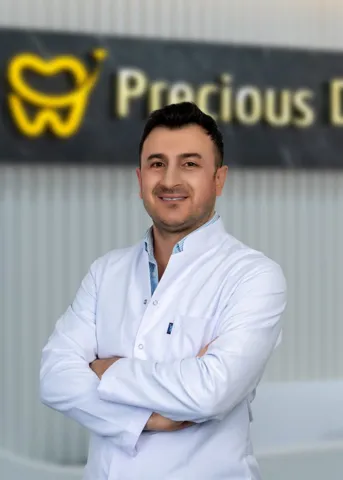 Clinically reviewed by Dt. Hüseyin Yavuz Özbek, implant dentist · Last checked October 2026
Adult dental care is largely outside the Dutch basic insurance (basisverzekering). Implants are covered only in narrow cases, such as a severely shrunken toothless jaw where a removable denture needs support, and disputes about treatment in Türkiye have not succeeded. Supplementary dental policies vary and often require approval first. The Belastingdienst’s 2025 overview lists a bridge or crown on an implant among deductible healthcare costs, above a threshold and only where nothing is reimbursed.
In the Netherlands, the starting point for anyone thinking about full-arch implants is unusual by European standards: for adults, the basic health insurance pays for almost no dental care at all. That changes the comparison. Whether you have All-on-6 in Utrecht, Antwerp or Antalya, you will most likely pay for it yourself. The questions worth asking are therefore narrower: is there any part your supplementary policy will pay, can some of the cost be set against tax, and how will the treatment be looked after when you are home?
We describe official sources and published decisions as we found them in October 2026. Your own policy wording decides what you receive, so use this as preparation for a conversation with your insurer.
The basic insurance and implants
The Dutch Health Insurance Act (Zorgverzekeringswet) does not include ordinary dental treatment for adults in the basic package. The National Health Care Institute (Zorginstituut Nederland), which describes what basic insurance covers, lists a small number of exceptions. Crowns, bridges and implants are covered for front teeth that never developed or were lost entirely in an accident. Beyond that, implants fall under special dental care (bijzondere tandheelkunde): chiefly when a toothless jaw has shrunk so severely that a removable denture can only be held in place with implants. In April 2026 the Institute added that zygomatic implants can be covered for an extremely shrunken toothless upper jaw, again to hold a removable denture and only when no other treatment is possible.
Two points follow from this. The exception is for supporting a removable prosthesis, not for a fixed bridge such as All-on-6. And it applies to a specific medical indication assessed by the insurer, usually with prior approval. Published decisions of the healthcare complaints body show how strictly this is read. In one, a claim for implant treatment carried out in Istanbul was rejected because the treatment did not fall under the insured benefits. In another, a sinus lift carried out to make room for an implant was not covered because the implant itself was not a covered treatment.
Supplementary dental insurance
Most people in the Netherlands who have dental cover have it through a supplementary policy (aanvullende tandartsverzekering). These policies differ widely. Common features are an annual maximum, a percentage of the bill reimbursed, and categories that the policy will or will not pay for. Some reimburse only after an accident. Many reimburse treatment abroad only up to the amount that would have been paid in the Netherlands, and some only within Europe.
Published complaints decisions also show a pattern worth learning from. Claims have failed because the insured person did not ask for approval before treatment, because the treatment went beyond restoring what existed before an accident, or because a condition already existed before the policy applied. In one case about treatment in Türkiye, the claim under the dental heading was rejected, while a small amount was paid under the policy’s emergency care abroad heading. The lesson is simple: ask first, in writing, with the plan in hand.
What to send your insurer
- A written treatment plan that lists each element separately: implants, abutments, the bridge, temporary teeth, extractions and any bone grafting.
- The clinic’s full legal name and address, and its Ministry of Health authorisation (Precious Dental’s is ST-4647, listed on HealthTürkiye).
- The planned dates.
- A direct question: “Which items, if any, will you reimburse for treatment in Türkiye, and on what conditions?”
Tax: specific healthcare costs
The Netherlands allows some healthcare costs to be deducted from income tax as specific healthcare costs (specifieke zorgkosten), above an income-related threshold and only for the part that no insurer reimburses. The Belastingdienst’s overview for 2025 lists a bridge or crown on an implant among the deductible items. A Dutch appeals court had earlier treated crowns and implants as aids, which a tax advisers’ association reported in 2019. Removable dentures are treated differently: the 2025 overview says they are usually not deductible, because the statutory personal contribution cannot be deducted. Costs within your insurance excess and insurance premiums are never deductible.
This area changes and is easy to get wrong. Before you count on any tax benefit, check the current rules on the Belastingdienst website or ask a tax adviser, and keep:
- the invoice showing what each part of the treatment cost;
- proof of payment;
- any reimbursement your insurer made, since only the unreimbursed part can count.
Comparing costs fairly
Because the insurance side is similar wherever you are treated, the comparison is mainly about price, travel and aftercare. Precious Dental publishes one price for All-on-6 on both jaws: £6,500, including implants, zirconia teeth on a titanium bar, temporary teeth, extractions, X-rays, medication, hotel nights on both trips and transfers. Flights are not included. When you collect quotes from Dutch or other European clinics, ask each one to list the same items so that you are comparing like with like. Our chapter on what All-on-6 costs lists what is often left out.
Two trips from the Netherlands
All-on-6 abroad usually means two trips: one for the implants and temporary teeth, and one some months later for the final bridge. Dutch citizens can visit Türkiye without a visa for up to 90 days in any 180-day period, according to the Turkish Ministry of Foreign Affairs. Check your passport or identity card well before you book; our article on entry documents explains what to look for. Between the trips you wear fixed temporary teeth and the implants heal; the treatment timeline describes each stage.
Aftercare with your Dutch dentist
Many Dutch patients worry that a dentist at home will not want to look after work done elsewhere. In practice, what makes the difference is information. A dentist who knows the implant brand and type, the abutments, the screws and the design of the bridge can maintain it like any other implant work. Ask for these in writing before you leave the clinic. Precious Dental gives patients an implant passport and copies of their X-rays and scans, and uses MegaGen, Neodent or Straumann implants, which are widely used in Europe.
It is also worth asking your own dentist before you travel whether they are willing to do the check-ups and cleaning. Some practices prefer to know in advance. Our article on aftercare with your home dentist has a list of what to bring.
Your records under Dutch and European law
If you are collecting X-rays from your Dutch dentist to send to a clinic abroad, you have a right to a copy of your records. Under the General Data Protection Regulation, and as confirmed by the EU Court of Justice in 2023, the first copy of your medical records should be free. See your dental records under GDPR.
In short
- The Dutch basic insurance covers implants only in narrow cases, to support a removable denture, and not a fixed All-on-6 bridge.
- Supplementary dental policies vary; ask for written approval before treatment and send an itemised plan.
- A bridge or crown on implants may be deductible as a specific healthcare cost above a threshold; check the overview for your tax year.
- Plan aftercare with your Dutch dentist before you travel, and bring complete records home.
If you would like an itemised written plan for your insurer, send us a recent panoramic X-ray. Read why we recommend Precious Dental for All-on-6.
Questions readers ask
Does the basisverzekering pay for All-on-6?
Normally not. Adult dental care is outside the basic package except for special dental care with a specific indication. For implants the conditions are narrow, and the purpose is to support a removable denture, not a fixed bridge.
Will my aanvullende tandartsverzekering pay?
It depends on the policy. Many supplementary dental policies have low annual maximums and conditions about prior approval and treatment abroad. Ask your insurer in writing with a written quote.
Is there a ruling about implants in Turkey?
Yes. The Dutch healthcare complaints body (SKGZ) has published decisions in which claims for implant treatment in Istanbul and elsewhere in Türkiye were turned down under the policy conditions. Each case depends on its facts.
Can I deduct implant costs from my tax?
Possibly. The Belastingdienst’s 2025 overview lists a bridge or crown on an implant as a deductible healthcare cost, above an income-related threshold and only for the unreimbursed part. Check the overview for your tax year or ask a tax adviser.
Do I need a visa for Türkiye?
Dutch citizens can visit Türkiye for tourism without a visa for up to 90 days in any 180-day period, according to the Turkish Ministry of Foreign Affairs.
Sources
- Zorginstituut Nederland — Mondzorg en tandarts (Zvw)
- SKGZ — published decisions on dental treatment abroad
- Belastingdienst — Zorgkosten 2025: overzicht aftrekbare kosten
- Zorginstituut Nederland — Standpunt zygoma-implantaten (April 2026)
- SRA — Kosten implantaten en kronen aftrekbaar (2019)
- Ministry of Foreign Affairs of Türkiye — Visa information for foreigners
Checked in October 2026. Where we give our own view as a clinic, we say so.
Want an opinion on your own case?
Tell us what you are considering. A real person replies, and will say so plainly if All-on-6 is not the right step for you.