Your rights as a patient in Türkiye
Treatment abroad can feel like stepping outside the rules you know. Türkiye has its own written patient rights, and knowing them makes it easier to ask for what you need.
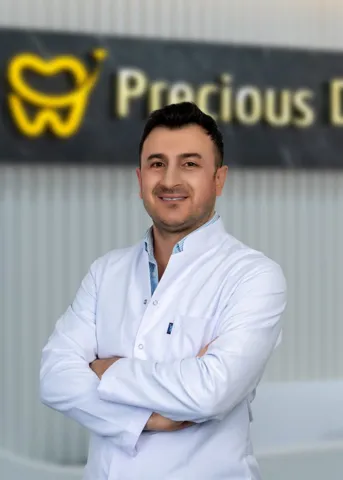 Clinically reviewed by Dt. Hüseyin Yavuz Özbek, implant dentist · Last checked October 2026
Türkiye’s Patient Rights Regulation, in force since 1998, gives patients the right to ask for information about their condition, the proposed treatment, its benefits and risks, and the alternatives (Article 15); to examine their file and records and obtain a copy (Article 16); to ask for incomplete or wrong information to be corrected (Article 17); and to confidentiality (Article 23). Treatment requires the patient’s consent.
When people consider treatment in another country, one worry comes up often: what are my rights there? In the EU you may know that you can see your records, that you must be told about risks, that you can complain. Türkiye has a written framework too. Its Patient Rights Regulation has been in force since 1998, and the principles will look familiar. This article summarises the parts that matter most for someone having All-on-6 in Antalya. We have drawn on the published regulation and legal commentaries; for a formal question, read the official text.
The Patient Rights Regulation
The regulation (Hasta Hakları Yönetmeliği) sets out the rights of people receiving healthcare in Türkiye and the duties of those who provide it. It covers access to services, information, consent, records, privacy and complaints. Several of its articles are directly useful when you are planning implant treatment.
The right to information (Article 15)
You have the right to ask for information about your state of health, the medical procedures proposed, their benefits and possible drawbacks, alternative methods of treatment, and the likely consequences of not having treatment. For All-on-6, that means you can ask why six implants rather than four, what the risks are in your case, whether keeping some teeth or choosing a removable option is realistic, and what happens if you decide to wait. Our chapters on four or six implants and risks will help you prepare the questions.
Consent
Treatment requires your consent, apart from legal exceptions such as emergencies. In dentistry, that consent is normally recorded on a written form before surgery. A form only means something if you understood what you signed. If your consultation is in a language that is not your own, see treatment in a language that is not your own.
The right to see and copy your records (Article 16)
You may examine the file and records containing information about your health, yourself or through a representative or legal guardian, and obtain a copy. For implant patients, this is how you secure what your dentist at home will need: X-rays, scans, the implant details and a description of the treatment.
The right to correction (Article 17)
You can ask for information in your records that is incomplete, unclear or wrong to be completed or corrected. Check the implant passport before you leave: brand, type, diameter and length of each implant, and their positions.
Confidentiality (Article 23)
Information obtained in the course of healthcare must be kept confidential. Türkiye’s Personal Data Protection Law (KVKK) adds rules for health data as a special category; see sending health data to a clinic outside the EU.
Rules for clinics that treat international patients
Alongside general patient rights, Türkiye regulates health tourism. Clinics that serve international patients must be authorised by the Ministry of Health, and the Ministry lists authorised providers on its HealthTürkiye portal. Precious Dental’s authorisation number is ST-4647, and you can find it there. Checking a clinic’s listing is one of the simplest things you can do before booking anywhere.
If something goes wrong
Most problems are best solved directly and quickly with the clinic, ideally in writing so there is a record. If that does not resolve it, Türkiye has official routes:
- the Ministry of Health, including HealthTürkiye’s line for international patients, +90 850 288 38 38;
- CİMER, the state’s central system for petitions and complaints to public authorities;
- for data protection issues, the Personal Data Protection Authority.
Keep copies of your plan, consent form, invoice and messages. They matter whichever route you use.
How to use these rights in practice
- Before booking: ask for a written plan with the treatment, materials, implant brand and price. Ask about alternatives.
- At the consultation: ask the dentist to go through risks specific to you: bone, gums, health conditions, smoking.
- Before signing consent: make sure you understand the form, in a language you read well.
- Before leaving: ask for copies of X-rays and scans and the implant passport, and check the details.
- After returning home: keep the clinic’s contact details and guarantee terms with your records.
Precious Dental gives patients an implant passport and copies of their X-rays and scans, and publishes its guarantee terms.
A practical checklist of documents
Using these rights is easiest if you know what to ask for. Before you leave the clinic after each trip, check that you have:
- the written treatment plan, with any changes made during treatment;
- a copy of the consent form you signed;
- the implant passport, with brand, system, size and position of each implant;
- copies of X-rays and the CBCT scan, ideally as digital files;
- a summary of what was done and any instructions, in a language you read well;
- prescriptions, with medicine names and doses;
- the invoice and proof of payment;
- the guarantee terms and the clinic’s contact details.
What the regulation does not do
It is worth being clear about limits. Patient rights rules set out what you are entitled to know and receive; they do not decide clinical questions such as whether four or six implants are right for you. They also do not replace a written agreement about price and guarantees, which is why a written plan matters. And a complaints process takes time; for most practical problems, a clear written message to the clinic is the fastest route to a solution.
Rights at home, too
Your rights do not end when you fly home. In EU countries, the GDPR gives you a right of access to data held about you, including by a clinic outside the EU that processes data about people in the EU. You can also ask your dentist at home for copies of anything they hold. See your dental records under GDPR.
Asking good questions before consent
Article 15 is most useful if you know what to ask. For All-on-6, questions worth asking before you sign consent include:
- What did my CBCT scan show about the bone in each jaw?
- Why six implants in my case, and where exactly will they go?
- Which teeth will be removed and why can they not be kept?
- Is a bone graft or sinus lift needed, and what happens if it does not take?
- What are the most likely complications for me, and how are they handled?
- What will I be able to eat with the temporary teeth?
- What happens if one implant does not heal?
Write the answers down, or ask for them in writing. They are part of the information you are entitled to.
Representatives and family
The regulation allows records to be examined through a representative or legal guardian. If a family member is helping you, for example an adult child arranging treatment for a parent, give the clinic written permission for them to see your information and receive documents on your behalf. It avoids awkward situations when they call or message the clinic.
In short
- Türkiye’s Patient Rights Regulation gives you rights to information, to see and copy your records, to correction and to confidentiality.
- Treatment requires your consent; make sure you understood what you signed.
- Clinics treating international patients must be authorised; check HealthTürkiye.
- Keep every document, and raise problems in writing.
Read why we recommend Precious Dental.
Questions readers ask
Do foreign patients have the same rights as Turkish patients?
The Patient Rights Regulation applies to people receiving healthcare in Türkiye. International patients also benefit from the rules on health tourism, which require clinics serving them to hold a Ministry authorisation.
Can I get a copy of my records from a Turkish clinic?
Yes. Article 16 of the Patient Rights Regulation gives you the right to examine your file and records, directly or through a representative, and to obtain a copy.
What information should I receive before treatment?
Article 15 covers your health status, the procedures proposed, their benefits and possible drawbacks, alternative methods and the consequences of not having treatment.
What if I am unhappy with my treatment?
Raise it with the clinic first, in writing. Türkiye also has official complaint channels, including the Ministry of Health and the state’s CİMER petition system. The Ministry’s HealthTürkiye line for international patients is +90 850 288 38 38.
Is my information kept confidential?
Yes. The regulation protects the confidentiality of information obtained during healthcare, and Türkiye’s data protection law treats health data as a special category.
Sources
- Hasta Hakları Yönetmeliği (Patient Rights Regulation), 1998 — mevzuat.gov.tr
- Hukukçular Evi — Hasta Hakları ve Aydınlatılmış Onam: Yönetmelik (1998) rehberi
- HealthTürkiye — Ministry of Health portal for international patients
- CİMER — Presidential Communication Centre
- Personal Data Protection Authority of Türkiye (KVKK)
Checked in October 2026. Where we give our own view as a clinic, we say so.
Want an opinion on your own case?
Tell us what you are considering. A real person replies, and will say so plainly if All-on-6 is not the right step for you.